
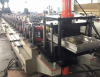
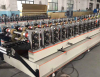
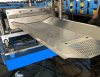
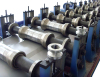
Sound barrier, mainly used for sound insulation and noise reduction of roads, highways, elevated composite roads and other noise sources. It is divided into a purely sound-reflecting reflective sound barrier, and a composite sound barrier combined with sound absorption and sound insulation.


|
Items |
Specifications |
|
Suitable material |
PPGI/Aluminium sheet/galvanized sheet/various sheet plates |
|
Thickness of coil sheet |
0.8-1mm |
|
Coil width |
825mm |
|
Effective width |
500mm |
|
Material of main frame |
350H steel |
|
Diameter of shaft |
70mm, high grade 45# steel |
|
Roller |
High grade 45# steel, quenched and tempered treatment |
|
Thickness of middle plate |
16mm, 45# steel plate |
|
Forming station |
18 rows |
|
Drive type |
By chain(1.0 inch), link bearing model 6210 |
|
Sidewall connection bar |
25mm, zinc plated |
|
Forming speed |
About 10-15m/min |
|
Control System |
PLC |
|
Material of razor blades |
Cr 12, quenching 58-62℃ |
|
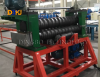
5 ton decoiler |
1 set |
|
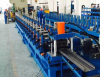
Main roll forming machine |
1 set |
|
Cutting device |
2 sets |
|
PLC Control box |
1 unit |
|
Hydraulic station |
1 unit |
|
Out table |
2 units |
|
Safety cover |
1 unit(Optional) |
Road noise barrier noise reduction principle: According to the principles of geometric acoustics, sound travels in a straight line outdoors. If a wall or other object with a certain amount of sound insulation is inserted between the sound source and the receiving point, the sound transmission path is blocked. If the sound source is not seen at the receiving position, that is, the direct sound from the sound source cannot be received, the sound level at the receiving point will be significantly reduced.
After inserting a sound barrier between the sound source and the receiving point, the difference between the sound pressure level at the receiving point and the sound pressure level without the sound barrier is called the insertion loss of the sound barrier.
When a sound wave from a noise source encounters a sound barrier, it will travel along three paths: part of the diffraction across the top of the sound barrier to the sound receiving point; part of the sound barrier penetrates the sound barrier to the sound receiving point; part of the sound barrier Reflections on the wall. The insertion loss of the sound barrier mainly depends on the sound energy distribution of the sound waves emitted by the sound source along these three paths.



CONTACT US
Contact US
Product Information
Quantity
Unit
Piece
Support order samples, customization, wholesale direct, and complete payment. If the product you look for does not have corresponding customized content, pls fill out the form below to contact us, and we will reply ASAP.